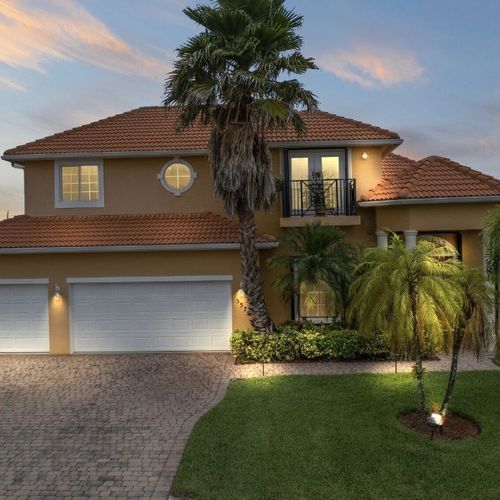


Every week I talk to someone relocating from the Northeast or the Midwest who's done their homework on price per square foot and school ratings, and hasn't heard of any of the five things below. None of them are dealbreakers. All of them change how you should shop.
Flood Zone Isn't Just a Line on a Map Anymore
FEMA flood zones (X, AE, VE) still determine whether a lender requires flood insurance, but since Risk Rating 2.0 took effect, your zone no longer sets your premium on its own. Two homes in the same Zone AE, same street, can carry premiums that differ by thousands of dollars based on elevation, foundation type, and distance to water. Even Zone X — the "low risk" zone that most inland Treasure Coast neighborhoods fall into — isn't risk-free: roughly a quarter of all NFIP flood claims nationally come from Zone X properties. Get an actual insurance quote before you write an offer, not after. It can move your monthly payment more than the interest rate will.
HOAs Run the Show in a Lot of Newer Communities
If you're coming from an area where HOAs are the exception, get ready — they're closer to the default here, especially in newer master-planned communities like Tradition. That's not a bad thing; it's usually what keeps the community looking the way it did in the sales brochure five years later. But fees, rules on everything from paint colors to parking a boat in your driveway, and the community's reserve fund health are all things to read before you fall in love with a floor plan, not after you close.
Hurricane Season Isn't Background Noise — It Affects Your Closing
June through November, insurance companies can refuse to bind or renew a policy once a storm is officially named and tracking toward Florida, even if it ends up nowhere close. If you're closing during that window, your insurance needs to be locked in early — not the week of closing — or you risk a delay that has nothing to do with financing.
The Treasure Coast Isn't One Market — It's Five
Port St. Lucie, Fort Pierce, Stuart, Jensen Beach, and Palm City each have a different feel and a different price point, and they're spread out enough that commute matters more than it looks like on a map. Master-planned communities like Tradition and St. Lucie West run $450,000 and up; areas east of US-1 in Port St. Lucie offer real affordability with older homes and often no HOA. Stuart and Jensen Beach lean waterfront and walkable. Knowing which of the five actually matches your budget and lifestyle before you start touring saves a lot of wasted weekends.
Right Now, You're Buying in a Buyer's Market
As of 2026, Port St. Lucie inventory is up 15 to 40% year-over-year depending on the neighborhood, and homes are taking 85 to 94 days to sell on average — a real shift from the frantic, multiple-offer market of a few years ago. That means more room to negotiate, more time to think, and less pressure to waive contingencies than you may have heard about secondhand. It's a good time to be a careful buyer.
Relocating to the Treasure Coast? I put together a Perfect Home Finder questionnaire specifically for buyers who don't know the area yet — it takes five minutes and does a lot of the narrowing-down for you.
Sources: Flood zones & Risk Rating 2.0, Port St. Lucie 2026 market data
Check out this article next